Reviewing Watercolor Christmas Cute Sloth Clipart for Embroidery
As a designer who spends more time staring at stitch simulations than actual fabric, I have learned that not every pretty picture translates well to thread. We often get swept up in the aesthetic of a digital file, forgetting that embroidery is a tactile, structural medium. Recently, I pulled up the Watercolor Christmas Cute Sloth Clipart to evaluate its potential for a holiday capsule collection I am developing for a local boutique. My goal was not just to admire the art, but to determine if it could survive the needle and maintain its charm on finished goods.
First Impressions: Mood and Visual Personality
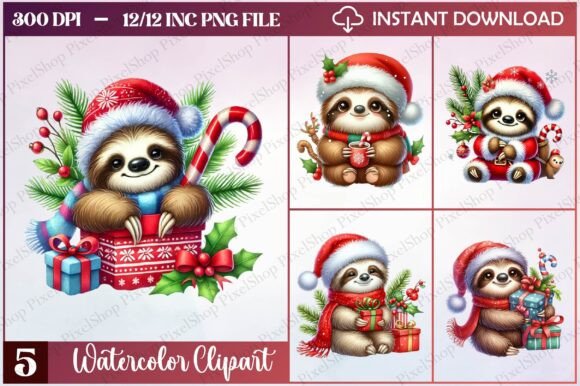
The immediate appeal of this design lies in its softness. Unlike vector-heavy graphics with hard edges, this piece leans into the fluid, organic nature of watercolor. The sloth, rendered with gentle gradients and a relaxed posture, exudes a calm that is perfect for the often chaotic holiday season. For embroidery designers, this presents both an opportunity and a challenge. The lack of harsh outlines means the design relies heavily on color blending and stitch direction to define shape.
In terms of layout, the composition is balanced. The sloth is central, likely adorned with subtle festive elements like holly or a scarf, which adds seasonal context without overwhelming the main subject. This visual personality suggests it belongs on items meant for comfort and warmth. It does not scream for attention; instead, it invites a closer look. This is crucial for high-end handmade products where subtlety often signals quality.
Real-World Application: The Tote Bag Test
To test the viability of this Illustrations-style asset, I imagined a specific real-life scenario: a custom embroidered tote bag for a holiday gift market. Tote bags are staples for Etsy sellers and small shop owners because they offer a large, flat canvas. However, canvas texture can be unforgiving.
If I were stitching this Watercolor Christmas Cute Sloth Clipart onto a natural cotton canvas, the key would be managing the transition between the watercolor washes and the fabric weave. A direct translation using only fill stitches might look blocky. Instead, I would consider using a combination of satin stitch for the defining features of the sloth’s face and lighter fill stitches for the body to mimic the watercolor bleed. The result would be a handmade product that feels artisanal rather than mass-produced. Customers reacting to this would likely appreciate the effort required to soften the digital edges, increasing the perceived value of the item.
Fabric and Hoop Considerations
Not every surface is created equal. While this design shines on sturdy fabrics like denim, canvas, or heavy cotton twill, it requires caution elsewhere. On thin or stretchy fabrics, such as those used for baby embroidery items like onesies, the stitch density becomes a critical factor. If the original file is too dense, it will pucker the fabric, ruining the cute aesthetic. I always advise checking the stitch count and density settings before committing to a final run.
For curved surfaces like caps or hats, the design’s width matters. If the sloth is too wide, it will distort around the crown. In such cases, scaling down might lose the delicate watercolor details. Therefore, this design is best suited for flat or slightly curved areas, such as the front panel of a cap, a sweatshirt embroidery chest pocket, or a pillow cover. When working with dark fabrics, the light pastel tones typical of watercolor art may disappear. Here, underlay stitches and perhaps a white backing or applique base become necessary to ensure the thread colors pop.
Stitching Strategy and Technical Notes
Translating a watercolor effect into a machine embroidery design requires thoughtful thread selection. You cannot rely on a single shade of brown or green. To capture the depth of the original clipart, you need a gradient of thread colors. I recommend mapping out a palette that includes at least three to four shades for the main body of the sloth. This creates a manual blend that mimics the digital watercolor effect.
Regarding stitch types, avoid heavy satin stitches for large areas, as they can snag and look bulky. Instead, use a mix of running stitch for outlines and light fill stitches for shading. If the design includes text or small festive icons, ensure they are large enough to be legible. Tiny lettering often gets lost in embroidery, especially after washing. Always test the design on scrap fabric first. This allows you to check thread tension, color contrast, and overall clarity without risking your final garment.
Commercial Viability and Brand Consistency
For Etsy sellers and creative entrepreneurs, the commercial appeal of this design is strong. Holiday-themed items sell well, but the market is saturated with generic red and green motifs. A cute sloth offers a unique twist, appealing to buyers looking for something whimsical and modern. It fits perfectly into a brand identity that values coziness, humor, and nature.
However, professionalism is key. A poorly stitched version of this design can look messy, damaging customer trust. Ensure that your embroidery file is optimized for your specific machine. Check for jump stitches and trim points to minimize post-production cleanup. A clean finished product reflects well on your craft business. Additionally, consider how this design looks in printable mockups. Even if you are selling physical items, high-quality digital previews help buyers visualize the final product, boosting engagement and sales.
Practical Designer Advice
Before you list this as a small shop product, take these practical steps:
- Test on Multiple Fabrics: See how the design behaves on knit versus woven materials. Use appropriate stabilizer for each.
- Check Licensing: Confirm whether the digital embroidery file allows for commercial use. Never assume; always read the terms.
- Contrast Check: View the design in black and white to ensure the shapes are distinct without color reliance.
- Wash Test: Stitch a sample, wash it, and dry it. Check for puckering or thread breakage.
- Scale Appropriately: Ensure the hoop size matches the design dimensions. Do not stretch a small design to fit a large hoop, as this distorts the aspect ratio.
In conclusion, the Watercolor Christmas Cute Sloth Clipart is a charming asset that, when handled with technical care, can elevate your holiday collection. It bridges the gap between digital art and tactile craft, offering a unique aesthetic for personalized gifts and custom apparel. By respecting the limitations of embroidery and leveraging the strengths of the design, you can create pieces that resonate with buyers and stand out in a crowded market.