Reviewing Vintage Christmas Children Clipart for Stitching
As an embroidery designer who spends more time staring at digitized files than I do sleeping, I have learned that not every pretty picture translates well to thread. We often get swept up in the aesthetic of a design, forgetting the mechanical reality of the needle and bobbin. Today, I am taking a close look at Vintage Christmas Children Clipart, evaluating it not just as a visual asset, but as a functional component for real-world embroidery projects. If you are an Etsy seller, a boutique owner, or a hobbyist looking to elevate your holiday offerings, understanding how these illustrations behave under the needle is crucial.
First Impressions: Nostalgia Meets Technical Reality
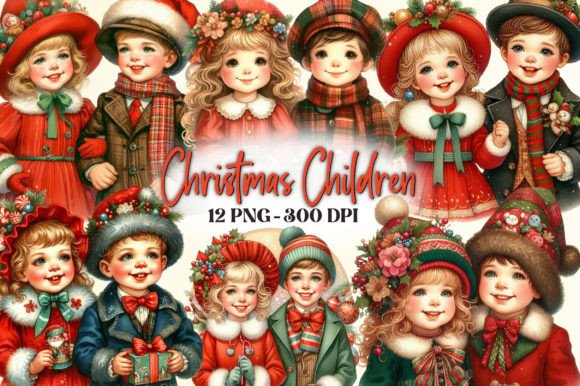
The immediate appeal of Vintage Christmas Children Clipart lies in its mood. It evokes a specific era of holiday warmth—think soft wool coats, rosy cheeks, and quiet winter scenes. For embroidery, this nostalgic vibe is powerful because it connects emotionally with buyers. However, from a technical standpoint, vintage-style illustrations can be tricky. They often rely on subtle shading and fine lines that do not always survive the transition from pixel to stitch.
When I first opened these files, I looked for clean outlines and distinct color blocks. The success of any machine embroidery design depends on clarity. If the original illustration is too busy, the resulting embroidery will look muddy. Fortunately, these particular assets seem to balance detail with simplicity. The shapes are recognizable, which is vital when you are working with the limitations of thread thickness. This balance suggests that the design can work well for both detailed wall art and smaller, functional items.
Real-World Application: The Tote Bag Test
To truly judge a design, you must imagine it on a product. Let’s consider a custom embroidered tote bag, a staple for any craft business during the holiday season. I visualized placing one of the children figures from the clipart set on a natural canvas bag. The vintage aesthetic pairs beautifully with the organic texture of cotton canvas.
In this scenario, the Vintage Christmas Children Clipart serves as the focal point. Because the design likely features classic holiday colors—reds, greens, creams, and browns—it stands out against the neutral background without being overwhelming. For an Etsy seller, this is a strong selling point. It feels handmade and thoughtful, rather than mass-produced. The key here is scale. A tote bag offers a generous canvas, allowing the details of the child’s clothing or accessories to breathe. If you were to shrink this same design too much, those intricate details might merge into a single blob of thread.
Apparel and Personalized Gifts
Moving beyond bags, let’s talk about custom apparel. Imagine this design on a crewneck sweatshirt. Sweatshirt embroidery requires careful handling of stitch density. If the design is too dense, the fabric will pucker, creating an uncomfortable stiff patch on the chest. When reviewing these illustrations, I check for areas that might require heavy fill stitch coverage. If the original clipart has large solid areas, a skilled digitizer would need to break them up with lighter patterns or use applique techniques to reduce bulk.
For baby embroidery, such as on a onesie or a blanket, the softness of the design is a major advantage. Parents love vintage aesthetics for nursery decor and holiday gifts. However, you must be cautious with thread colors. Ensure that the threads used are soft and high-quality, as baby skin is sensitive. Additionally, the hoop size must be appropriate. A small 4x4 hoop might crop out essential parts of the illustration, so always check the dimensions before committing to the stitch-out.
Navigating Technical Challenges
While Vintage Christmas Children Clipart is visually charming, it is not without its challenges. Here is where experience matters. You cannot simply load a file and hit start. You must consider the fabric and the machine settings.
- Fabric Texture: On textured fabrics like towels or fleece, fine details can get lost. The loops of the towel can obscure thin running stitch lines. For these materials, I recommend simplifying the design or increasing the stitch weight slightly to ensure visibility.
- Dark Fabrics: If you are stitching on a dark navy or black garment, you need to ensure the design has enough contrast. Vintage palettes can sometimes be muted. You may need to adjust the thread colors to brighter variants to make the image pop, or use a white underlay to prevent the dark fabric from showing through.
- Curved Surfaces: Embroidering on caps or curved sleeves requires stability. The design should not be too wide, or it will distort around the curve. Check the width of the clipart elements against your cap frame capabilities.
- Washability: Holiday items are often kept as keepsakes, but if they are used, they will be washed. High stitch density can lead to thread breakage over time if not properly stabilized. Always use a quality stabilizer appropriate for your fabric type.
Enhancing Brand Value and Customer Trust
Why does the choice of design matter for your business? It comes down to perceived value. A generic, clip-art style embroidery looks cheap. A well-executed, thoughtfully chosen design like Vintage Christmas Children Clipart elevates the finished product. It signals to the customer that care was taken in the selection and creation process.
For digital product sellers, these illustrations can also serve as excellent printable mockup assets. Showing your embroidery design on a realistic vintage-themed background can help customers visualize the final result. This builds trust and reduces hesitation in purchasing. Whether you are selling the digital embroidery file itself or the physical handmade product, the visual consistency of your brand matters. Vintage themes suggest tradition, quality, and warmth—attributes that resonate strongly during the Christmas season.
Practical Designer Notes for Best Results
Before you launch your next holiday collection using these assets, keep these practical steps in mind:
- Test on Scrap Fabric: Never stitch directly on your final product. Use a scrap piece of the same fabric to test tension, density, and color combination.
- Check Licensing: Ensure you understand the license terms for the Vintage Christmas Children Clipart. Can you sell the finished embroidered items? Can you resell the digital files? Clarify this before investing time.
- Inspect Small Details: Zoom in on the digitized file. Are there tiny jumps or unnecessary trims? Clean up the file if necessary to ensure smooth stitching.
- Contrast Check: View your design in black and white. If the details disappear in grayscale, they will likely lack definition in thread. Adjust your color palette accordingly.
- Stabilizer Selection: Match your stabilizer to your fabric. Cut-away for stretchy knits, tear-away for stable wovens. This prevents distortion and ensures the design lays flat.
In conclusion, Vintage Christmas Children Clipart offers a delightful blend of nostalgia and charm that fits perfectly into the current market for personalized, handmade holiday goods. By approaching these illustrations with a designer’s eye for technical detail, you can create stunning embroidery projects that delight customers and stand the test of time. Whether for a tote bag design, a cozy sweatshirt, or a cherished gift, these assets have the potential to shine, provided you respect the mechanics of the craft.