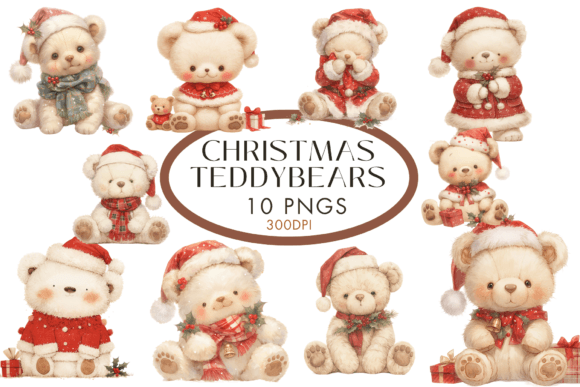
Christmas Teddybear Clipart: Cozy Illustrations
When a client approaches me with a brief for a holiday-themed campaign, the immediate challenge is balancing nostalgia with modern professionalism. We are not just slapping a Santa hat on a logo; we are crafting an emotional connection. Recently, I evaluated Christmas Teddybear Clipart for a boutique handmade business launching a seasonal gift line. The goal was to create a visual identity that felt warm, approachable, and trustworthy without appearing childish or amateurish. As a designer, my first impression of these assets was surprisingly positive. They offer a distinct softness that cuts through the visual noise of typical high-contrast, aggressive holiday marketing.
Evaluating the Visual Mood and Style
The aesthetic of this clipart leans heavily into comfort. The lines are generally smooth, avoiding the jagged edges often found in lower-quality raster images. This matters immensely when scaling for different mediums. Whether you are working on a large-format poster or a tiny favicon, the integrity of the illustration must hold. These Illustrations evoke a sense of hand-drawn charm, which aligns perfectly with the current trend toward authentic, human-centric branding. For a small business owner, this style signals "handmade" and "careful craftsmanship" rather than "mass-produced." It creates an instant emotional hook, inviting the viewer to pause and engage with the content.
Real-World Application in Client Projects
In a real-world scenario, versatility is king. I tested these assets across several touchpoints for our hypothetical client. For packaging design, the teddy bear worked exceptionally well as a central hero graphic on kraft paper boxes. The neutral tones of the bear complemented the natural texture of the packaging, creating a cohesive, eco-friendly vibe. When applied to product labels for homemade jams and candles, the clipart served as a charming seal of quality. It did not overpower the typography but instead framed it, guiding the eye naturally to the product name.
For digital applications, such as social media graphics and Pinterest pins, the asset performed well against both light and pastel backgrounds. In Canva templates designed for the client’s email newsletter, the bear acted as a friendly mascot, breaking up text-heavy sections and increasing reader engagement. For those involved in print-on-demand or running an Etsy product shop, these files are invaluable. They can be easily integrated into t-shirt design layouts, mug wraps, and tote bags, offering a ready-made solution for seasonal merchandise without the need for custom illustration fees.
Navigating Layouts and Hierarchy
Understanding where to place these assets is crucial for maintaining visual hierarchy. In large layout areas, such as homepage banners or event flyers, the teddy bear can stand alone as a focal point. However, in crowded layouts, caution is required. I found that the asset works best when given breathing room. Surrounding it with negative space allows the details to shine and prevents the design from feeling cluttered. When used as a decorative accent in editorial design or blog headers, it adds personality without distracting from the core message.
Conversely, there are contexts where this clipart should be used carefully. It is not suitable for minimalist corporate branding that relies on stark, geometric precision. Similarly, in low-contrast designs or on complex, busy backgrounds, the softer edges of the bear might get lost. Always ensure there is sufficient contrast between the illustration and the background color to maintain readability and professional polish.
Technical Considerations for Designers
Before delivering any final files to a client, I run a series of technical checks. First, I test the asset in black and white. This reveals if the form holds up without color reliance, which is essential for single-color printing methods like screen printing or embossing. Next, I inspect the file formats. If you are purchasing a design bundle, ensure it includes high-resolution PNG design files with transparent backgrounds. Transparency is non-negotiable for seamless integration into layered compositions. For scalability, an SVG design or vector format is ideal, allowing for infinite resizing without pixelation, which is critical for large-scale marketing visuals or signage.
Typography pairing is another key consideration. I experimented with various font styles to see what complemented the teddy bear’s personality. A rounded sans serif font enhanced the modern, friendly feel, while a delicate script font added a touch of elegance suitable for high-end gift tags. A bold display font worked well for sale announcements, creating a playful contrast. Avoid overly rigid or formal serif fonts, as they can clash with the organic nature of the illustration.
Commercial Viability and Licensing
For freelancers and agency owners, verifying the commercial license is the most critical step. You must confirm that the asset can be used in client work, especially if that work involves resale, such as sublimation design on physical products or digital product sales. Using unlicensed assets can lead to severe legal repercussions and damage your professional reputation. Always read the terms of use provided by the creator in the creative marketplace. Most reputable sellers clearly outline whether the asset can be used for print-on-demand, digital templates, or physical goods.
Furthermore, consider the longevity of the design. While holiday themes are seasonal, a well-designed asset like this can become part of a brand’s recurring visual language. If the client plans to release holiday collections annually, establishing this teddy bear as a mascot can build brand recognition and customer loyalty over time. It transforms a simple graphic design asset into a strategic brand element.
Final Verdict for Creative Professionals
In conclusion, Christmas Teddybear Clipart is a robust addition to any designer’s toolkit, particularly for those serving the handmade, retail, and lifestyle sectors. It bridges the gap between whimsical charm and professional presentation. When used thoughtfully, it enhances brand identity, improves audience engagement, and adds a layer of warmth that pure typography cannot achieve. Whether you are creating a Cricut project for a local craft fair, designing stickers for packaging seals, or building a comprehensive web design layout, these illustrations offer the flexibility and quality needed for high-stakes client projects. By paying attention to contrast, scale, and licensing, you can leverage this asset to create polished, emotionally resonant designs that drive results.